HRIS for SMEs Luxembourg is less about modules and more about capabilities. As headcount grows, a second site opens or payroll moves to a fiduciary, friction shifts to delegations, granular access, multi establishment operations, controls and reporting. This guide details what an HRIS must offer to support growth in Luxembourg, then what changes when the organisation becomes large and regulated.
HRIS priorities for a growing Luxembourg SME
When a Luxembourg SME moves from a few dozen to over a hundred people, HRIS expectations shift. The need is not just forms, but orchestrating decisions, controls and exchanges with the Luxembourg ecosystem, while keeping it simple for multilingual managers and employees.
- Structured onboarding and offboarding: site based checklists, collection of identity and work documents, equipment handover and return, access deprovisioning. The HRIS should support data minimisation and records of processing, to be validated with your DPO.
- Multilingual self service: employee portal in FR, EN, DE, LU and possibly PT for leave requests, proofs, notes and information updates. Mobile experience should be smooth for field teams.
- Time and activities: time capture, timesheets, allowances, telework, on call. The HRIS should make time statements readily available in case of an ITM inspection.
- In house payroll or fiduciary: reliable payroll exports, aligned with current ACD published tax scales, and indexation tracking. For fiduciaries, a multi client HRIS such as FXP secures client file separation and speeds up production.
- Secure HR documents: payslips, contracts, amendments, certificates. An encrypted employee vault such as MySafeBox ensures individual delivery and retention according to legal durations to be confirmed with your DPO.
- Reporting: baseline dashboards for HR and finance steering, costs per cost center, leave, absence, overtime and budget preparation.
At this stage, the prime requirement is operational reliability: being able to demonstrate, if questioned by the CCSS, ITM or CNPD, that information is available, accurate, traceable and limited to authorised users.
Luxembourg compliance: CCSS, CNPD, ITM, ACD, CSSF
A relevant HRIS in Luxembourg understands local constraints and offers practical mechanisms to address them without adding friction.
- CCSS: track affiliations, hires and terminations, reconcile civil status information and consistency checks. The HRIS should help prepare or verify declarations through your existing channels.
- ACD and Bureau RTS: prepare variables needed for tax obligations, generate exports aligned to your fiduciary templates and manage the salary certificate. Templates evolve, so the HRIS must stay adaptable.
- ITM: retention and consultation of schedules, time clocks, premiums and specific agreements. The HRIS must make the relevant elements easy to retrieve on request.
- CNPD and GDPR: access logging, permission controls, encryption in transit and at rest, and erasure functions according to legal retention durations set with your DPO. The HRIS should document legal bases and purposes for each HR processing activity.
- CSSF for regulated employers: approval histories, segregation of duties, traceability of admin access and delegation policies. A control oriented HRIS eases discussions with internal audit and external reviewers.
Beyond exports, the key topic is explainability: who did what, when, on what basis, and with which data. At Luxapps, security and compliance tooling is strengthened by Luxgap for hardening and regulatory watch, by LuxOps for hosting in Luxembourg, and by continuous technical checks operated via devops.luxgap.com. We do not publish generic commitment figures, we design the concrete safeguards you need.
Access and delegations: from simple to controlled
In a small setup, one HR lead can do everything. As the company grows, you must distribute, trace and regain fine grained control. An HRIS for SMEs Luxembourg should make this natural.
- Permission model: views by site, legal entity, cost center, location or project. An attribute based model (role, reporting line, country of residence, contract type) prevents unmanageable matrices.
- Temporary delegations: cover for an absent manager, limited proxy to approve leave or validate time, with explicit start and end and a searchable register.
- Segregation of duties: one person enters, another approves. The HRIS should offer maker checker circuits on sensitive items such as payroll variables, IBAN, allowances, work certificates.
- Traceability and evidence: timestamps, document fingerprints, preservation of prior versions. The goal is to explain a decision months later without manual reconstruction.
- Protection of personal documents: delivery into an encrypted employee safe such as MySafeBox, with controlled notifications and read history. Admin access should be rare and justified, with logging.
- Strong authentication: SSO with your identity provider, multi factor for sensitive roles, session policies aligned to your risks.
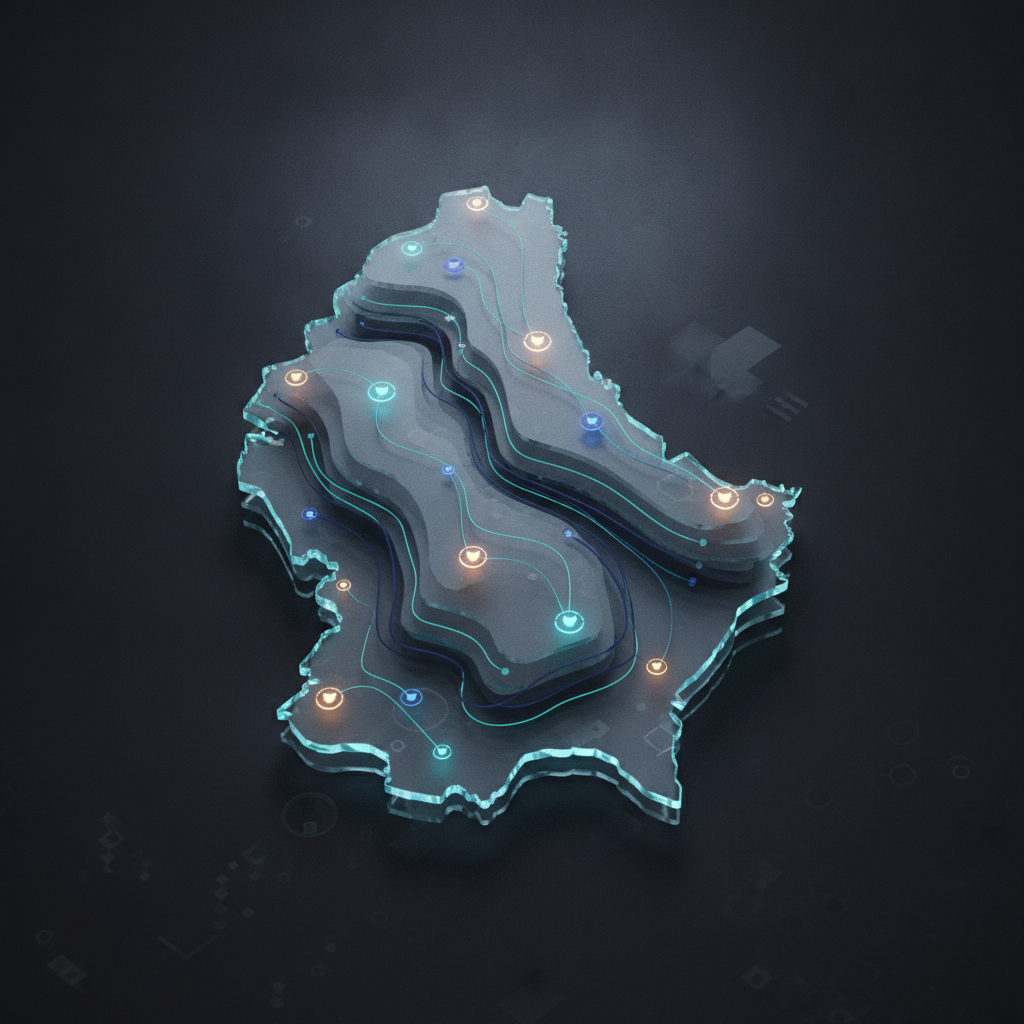
We illustrate these mechanisms with ScopeMap, a demonstrator built with AI Studio: a visual org chart where you simulate a reorganisation, then instantly see the impact on delegations, access and masking of certain data. It is a test bench to think through access policies before production.
Multi site, working time and field realities
Going multi site transforms the role of the HRIS. It becomes the day to day coordination tool, not just a database.
- Establishments and sites: attach employees to the right establishment, manage sites with different schedules, allowances or lockers, separate day and night teams and assign local leads.
- Scheduling and cover: team rosters, target capacity per slot, smart suggestions for replacements and alerts on under staffing. Approvals follow your circuits by role, site and budget.
- Working time: project timesheets, declared telework, on call, meal breaks, allowances. The HRIS should produce usable views for the ITM and your internal audit.
- Languages and cross border workers: notifications in FR or EN based on profile, consideration for FR BE DE realities for commuters, and local specifics such as indexation events.
- Consistency checks: alerts on unusual hours, overlaps, negative balances and excess of budgeted hours per cost center.
- Mobile and offline: capture and basic approvals on the go, with sync when network resumes.
These functions go beyond time capture. They help managers keep service commitments while producing reliable data for payroll and reporting.
HR and finance reporting: from tracking to decisions
In an SME, reporting starts with lists and exports. At 150 or 300 employees, it must deliver answers, not just columns.
- Executive dashboards: headcount, hires and leavers, tenure, absences, labour costs by cost center. Filters by entity, site, job or contract give the management team a useful view.
- Forecast and budget: payroll projections from open roles, indexation and internal mobility assumptions. The aim is to help finance simulate scenarios.
- Data quality: completeness checks, duplicates, outdated IBAN. A quality score prevents payroll surprises.
- Multi entity consolidation: as you become a group, the HRIS must aggregate without mixing. Access rights and consolidation areas are governed by Finance.
- Analytical exports: files ready for your BI, and exports aligned to your fiduciary templates. Where sensible, structures that follow publicly documented schemas are preferred.
For fiduciaries, FXP provides multi client steering designed for production: reusable settings, integrity checks, portfolio rules and per client reporting, with native compartmentalisation.
Integrations, scale up and the enterprise shift
The ecosystem of a growing SME does not stop at the HRIS. You must connect, extend, then govern at scale.
- Payroll and fiduciaries: reliable exports to in house payroll or your fiduciary, with integrity checks, template versioning and drop off logging. A robust bridge eliminates re keying.
- Identity and SSO: connection to your corporate identity provider, automatic provisioning and deprovisioning of accounts, cards and badges via connectors.
- Time and equipment: integrations with time clocks, scheduling, equipment and PPE management, inventories and reservations.
- KYC and AML: for fiduciaries and regulated employers, our KYC and AML tool can be combined with the HRIS to streamline onboarding of contributors, with strict separation between HR and compliance scopes.
- Remote sites and Luxembourg hosting: LuxOps hosts in Luxembourg, Luxgap strengthens security and tracks regulatory change, and devops.luxgap.com runs continuous technical checks. Without promising generic figures, we provide tooling that proves controls exist.
- Custom applications: when a business process falls outside the standard, Luxapps designs custom websites, mobile apps and business software that natively talk to the HRIS, to avoid stray files.
Moving from SME to large enterprise also means formalising governance: approved access policies, periodic reviews, risk committees for CSSF entities, and a data retention plan decided with your DPO. Your HRIS should make these practices concrete.
Choose, run the rollout and measure value
To succeed, treat your HRIS like an enterprise product: clear framing, realistic pilots, controlled ramp up and impact measurement.
- Buying checklist: permission model, temporary delegations, exportable audit logs, encrypted employee safe, Luxembourg residency, SSO, API, data quality, multi entity reporting and fiduciary readiness.
- Focused pilot: one site, one population, one process. Measure adoption, cycle time and data quality. Adjust before global rollout.
- Migration: controlled import of employees, essential history, establishment and cost center assignment, and per legal entity settings.
- Change and support: multilingual quick guides, help center, usage indicators and feedback loops with managers.
- Scale capacity: when you cross a threshold, switch on segregation of duties, large scale delegations and consolidated reporting. The ScopeMap demonstrator, built with AI Studio, helps you test access rules and scenarios before production.
Luxapps offers two complementary HRIS products: FXP, the multi client platform for fiduciaries, and MySafeBox, the encrypted employee safe that simplifies in house payroll and document delivery. They can be combined with our KYC and AML tool and custom developments when needed. Security and compliance are reinforced by Luxgap, hosting is operated in Luxembourg by LuxOps, with continuous technical audits via devops.luxgap.com.
Ready to evaluate an HRIS for SMEs Luxembourg without losing sight of local constraints? Explore our approaches and use cases at /en/hris-luxembourg/, then talk to us about your priorities via /en/contact/. We will help you frame a concrete, measurable pilot that fits the Luxembourg context.